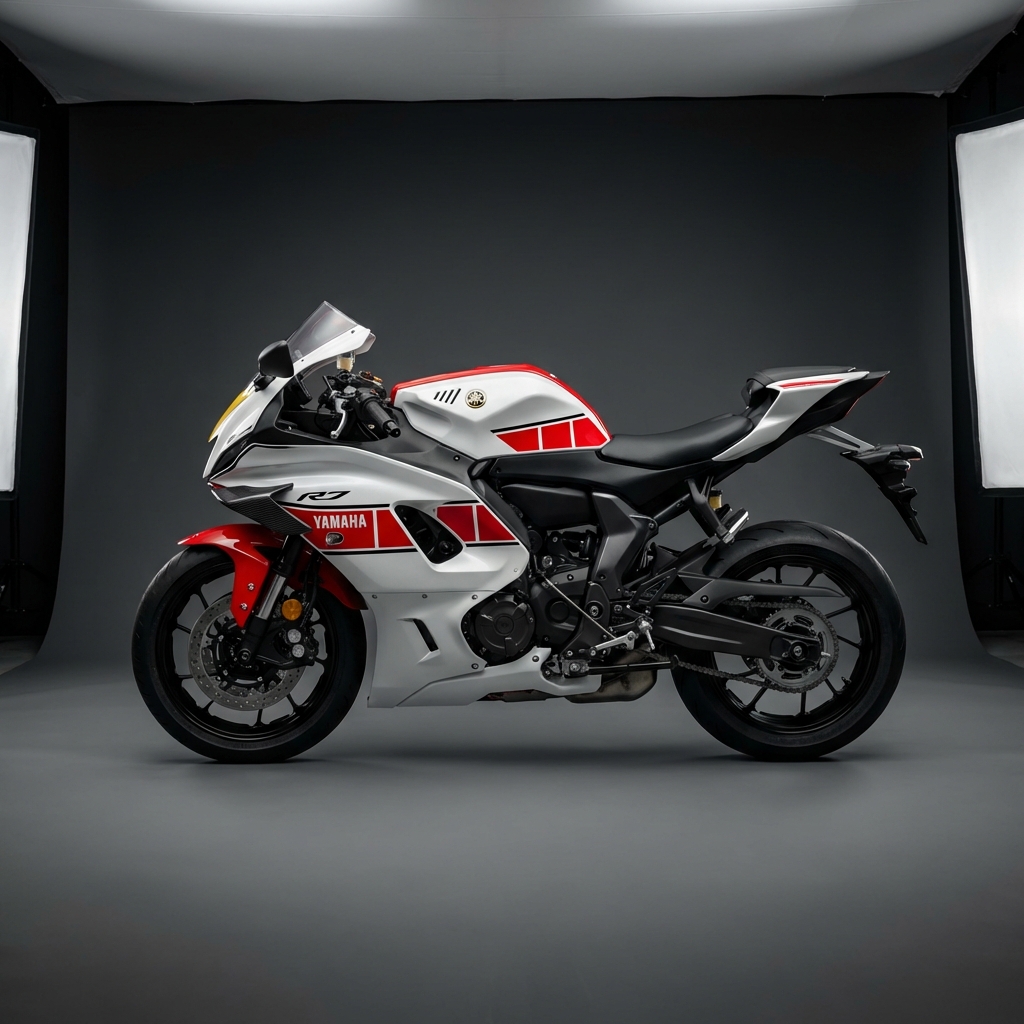
YZF-R7
$9,499
*Product specifications and price may vary; this is an approximate reference.
Full Specifications
| Engine | 689cc liquid-cooled, DOHC, inline 2-cylinder; 8 valves |
| Displacement | 689cc |
| Power | 73.4 HP @ 8,750 rpm |
| Torque | 67 Nm / 49 lb-ft |
| Weight | 188 kg / 414 lbs |
| Seat Height | 835 mm / 32.9" |
| Fuel Capacity | 13L / 3.4 gal |
| Transmission | 6-speed; multiplate assist and slipper clutch |
| Fuel Type | Gasoline |
Electronics
Rider Modes
Performance & Efficiency
- Top Speed
- 139 mph
- 0-60 mph
- 3.4 sec
Reliability & Ownership
Reliability The 2026 R7 utilizes the bulletproof CP2 engine architecture, widely regarded as one of the most reliable modern powerplants. Owners can expect high-mileage durability with minimal issues beyond standard wear items. Valve clearance checks are scheduled at generous 26,600-mile intervals, significantly lower than high-strung four-cylinder rivals. The cooling system is robust, and the electronics suite is simple enough to avoid the phantom sensor issues common in more complex machines.
Maintenance Oil and filter changes every 6,000 miles; Spark plugs and air filter every 12,000 miles; Major valve inspection at 26,600 miles.
Comfort & Ergonomics
The R7 features surprisingly aggressive ergonomics for its displacement class. Clip-ons are mounted below the triple clamp, forcing a committed tuck that mimics the R1. While the narrow chassis makes it easy to flick between knees, the seat is thin and optimized for weight shifts rather than touring. Heat management is excellent due to the slim twin-cylinder profile, though long-distance riders will find the wrist pressure significant after an hour of urban commuting.
Overview
" The Accessible Apex Hunter "
The 2026 Yamaha YZF-R7 continues to define the modern supersport era, prioritizing chassis feel and usable torque over raw, high-rpm horsepower. In a world where 200-hp superbikes are often too fast for the street, the R7 provides a visceral, engaging experience that rewards rider skill. By utilizing the legendary CP2 engine, Yamaha has created a machine that is as affordable to maintain as it is fun to ride. For 2026, subtle refinements to the bodywork and an updated TFT display bring it closer to its R1 sibling in aesthetics. This bike doesn't try to win spec-sheet wars; instead, it wins on the track and through the twisties by offering a slim, lightweight package that gives the rider total confidence to push their limits without the fear of a 1000cc high-side.
WikiMoto Verdict
"The ultimate bridge between entry-level accessibility and true track-day obsession."
In-Depth Review
The Identity of the R7
When Yamaha discontinued the road-going R6, many purists mourned the loss of the high-screaming inline-four. However, the YZF-R7 has proven that the market was actually hungry for something different: a bike that looks like a MotoGP machine but behaves like a surgical tool on a backroad. The 2026 model remains the torchbearer for this philosophy. It is narrow, aggressive, and unapologetically focused on corner speed rather than straight-line drag racing.
Engine: The Heart of the CP2
The 689cc Crossplane 2 engine is the star of the show. While 73 horsepower might seem modest compared to the 600cc supersports of old, the delivery is what matters. The 270-degree crank provides a characterful, V-twin-like grunt that pulls hard from 3,000 rpm. On the street, this makes the R7 far more usable than a traditional supersport; you aren’t constantly dancing on the gear lever to find power. It’s punchy out of corners and has enough top-end to keep things exciting, even if it lacks that final 14,000 rpm rush.
Handling and Chassis
This is where the R7 justifies its ‘R’ badge. The chassis is incredibly slim—narrower even than the R3—which allows the rider to lock in with their knees and manipulate the bike with minimal effort. The 41mm KYB inverted forks are fully adjustable and offer excellent feedback. In the 2026 iteration, the suspension valving feels slightly more refined, soaking up mid-corner bumps that might have upset the previous generation. The radial-mount Brembo master cylinder provides a firm, communicative feel at the lever, ensuring that you can trail brake deep into the apex with absolute precision.
Tech and Simplicity
Yamaha has intentionally kept the R7 minimalist. You won’t find six-axis IMUs, wheelie control, or multiple ride modes here. To some, the lack of traction control in 2026 feels like an oversight, but to others, it is the bike’s greatest strength. It forces the rider to develop throttle control and a direct connection with the rear tire. The new full-color TFT display is a welcome upgrade, offering better sunlight legibility and basic smartphone connectivity, but the focus remains on the tachometer and the road ahead.
Verdict
The 2026 Yamaha YZF-R7 isn’t trying to be a ‘budget’ bike; it’s a precision instrument. It serves the rider who wants to master the art of cornering without the intimidation factor of a liter-bike. While it can feel cramped for taller riders and lacks the electronic safety nets of its rivals, its mechanical purity is a breath of fresh air. For those looking to transition from a beginner bike to a serious sportbike, or for the veteran rider looking for a dedicated track tool that won’t break the bank, the R7 remains the smartest choice in the paddock.